
By Dr. Tanmay Deo
Knee pain is one of the most common problems seen in people above the age of 40. One of the leading causes of long-term knee pain is knee osteoarthritis. It can affect daily activities like walking, climbing stairs, sitting, or even standing for long periods.
In this blog, I would like to explain what knee osteoarthritis is, why it happens, and how it can be managed effectively.
What is Knee Osteoarthritis?
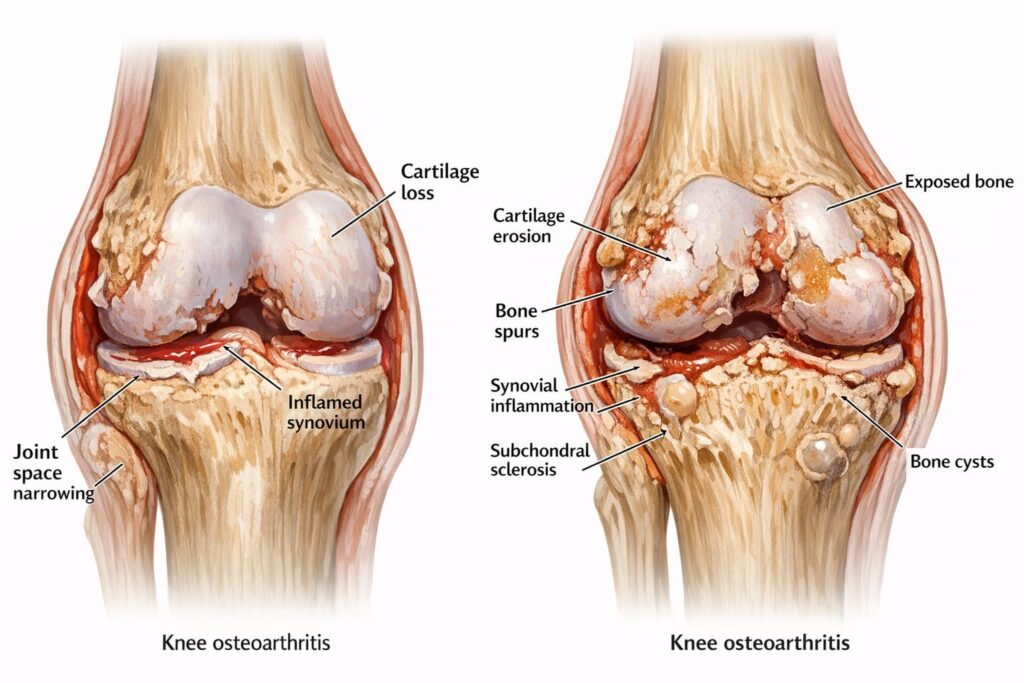
Knee osteoarthritis is a condition in which the protective cartilage in the knee joint gradually wears away. Cartilage acts like a cushion between the bones. When it gets damaged, the bones start rubbing against each other, leading to pain, stiffness, and reduced movement.
It is a degenerative condition, meaning it develops slowly over time and becomes more common with increasing age.
Causes of Knee Osteoarthritis
Several factors can increase the risk of developing knee osteoarthritis:
- Age – The risk increases after 40–50 years
- Excess body weight – Extra weight puts more pressure on the knee joints
- Previous knee injury or surgery
- Repetitive stress on the knee due to certain jobs or sports
- Family history of osteoarthritis
- Weak muscles around the knee joint
Common Symptoms
The symptoms of knee osteoarthritis usually develop gradually and may include:
- Pain in the knee, especially while walking or climbing stairs
- Stiffness, particularly in the morning or after resting
- Swelling around the knee
- Reduced ability to bend or straighten the knee
- A grinding or cracking sound while moving the knee
- Difficulty in daily activities like sitting, standing, or walking long distances
If these symptoms are ignored, the condition may worsen over time.
How is Knee Osteoarthritis Diagnosed?
Diagnosis is based on:
- A detailed medical history
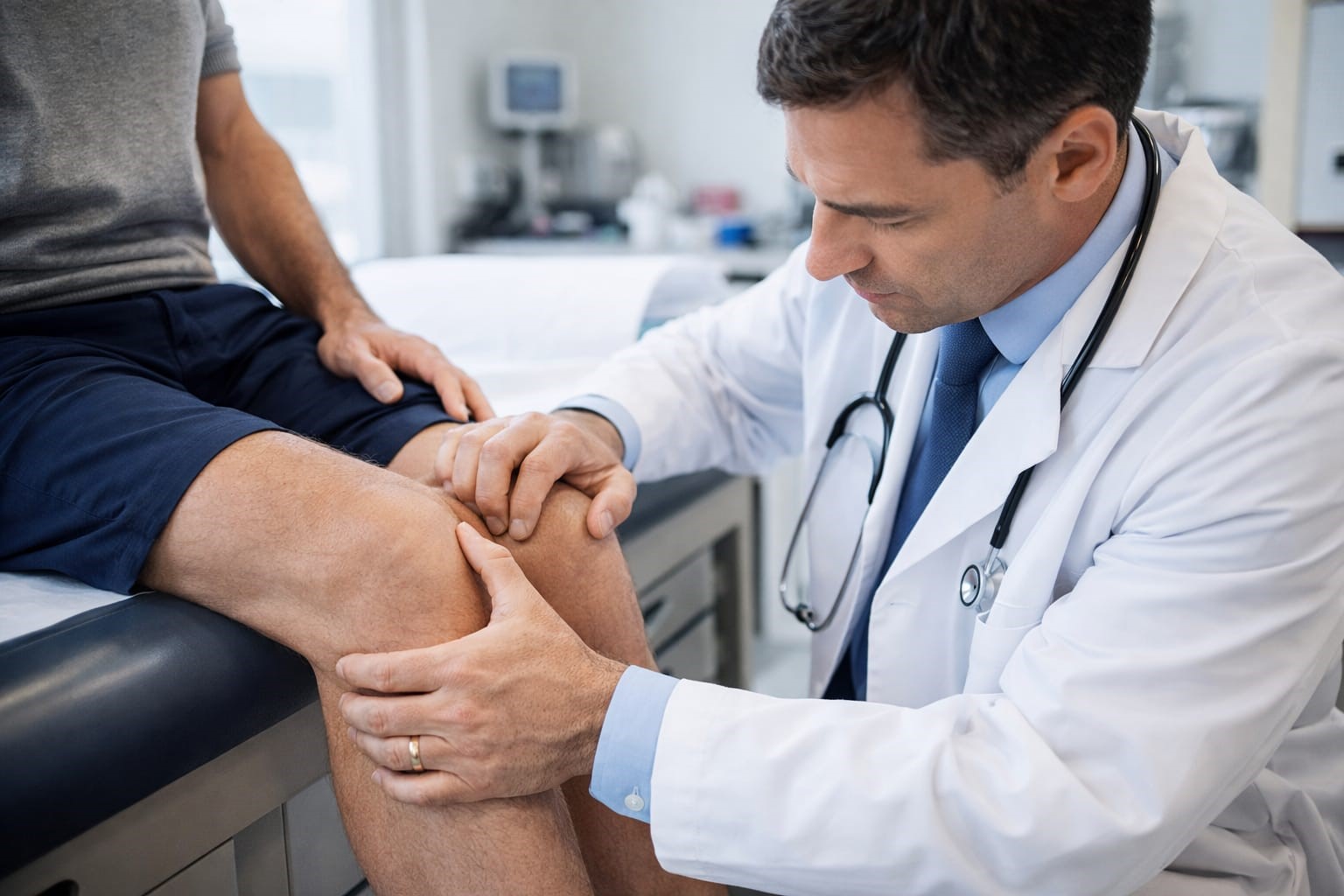
- Physical examination of the knee
- X-rays to check joint space narrowing and bone changes
- In some cases, MRI scans to assess cartilage and soft tissues
Early diagnosis helps in better management and slowing disease progression.
Treatment Options for Knee Osteoarthritis
Although knee osteoarthritis cannot be completely cured, proper treatment can significantly reduce pain and improve quality of life.
1. Lifestyle Changes
- Weight loss to reduce stress on the knee
- Avoiding activities that cause excessive knee strain
- Using supportive footwear
2. Physiotherapy and Exercise
- Strengthening exercises for thigh and leg muscles
- Stretching to improve flexibility
- Low-impact activities like walking, cycling, or swimming
3. Medications
- Pain relievers and anti-inflammatory medicines (as prescribed)
- Topical gels for pain relief
- Pro Cartilage Supplements
4. Injections
- Lubrication (viscos supplementation) injections
- Steroid injections for inflammation control in selected cases
5. Knee Braces and Supports
- Help in stabilizing the joint and reducing pain during movement
6. Surgical Treatment
When pain becomes severe and does not improve with conservative treatment, surgical options such as knee replacement may be advised. This is usually considered only when daily activities are significantly affected.
Knee replacement is of two types:
- Total Knee Replacement: In this procedure, both compartments of the knee joint are surgically replaced with artificial components to restore joint function and relieve pain.
- Partial Replacement: In this procedure, only the affected compartment of the knee joint is replaced, while the healthier compartments are preserved, making it suitable for patients with localized joint damage.
Can Knee Osteoarthritis Be Prevented?
While it may not always be preventable, the risk can be reduced by:
- Maintaining a healthy weight
- Staying physically active
- Strengthening knee and leg muscles
- Avoiding knee injuries
- Seeking medical advice early when knee pain begins
When Should You See a Doctor?
You should consult an orthopedic specialist if you experience:
- Persistent knee pain
- Difficulty walking or standing
- Swelling or stiffness that does not improve
- Pain affecting your daily life
Early treatment can help control symptoms and delay disease progression.
Final Thoughts
Knee osteoarthritis is a common condition, but it does not mean you have to live with pain. With the right guidance, exercises, and treatment, most patients can continue to lead active and comfortable lives.
If you are experiencing knee pain or stiffness, do not ignore it. A timely consultation can make a significant difference.
– Dr. Tanmay Deo
About Dr. Tanmay Deo
Dr. Tanmay Deo is a highly respected and trusted Orthopedic Surgeon in Bhiwandi and the surrounding areas, known for his expertise in diagnosing and treating a wide range of orthopedic conditions.
He completed his MS in Orthopedic Surgery from the prestigious KEM Hospital and Seth GS Medical College, Mumbai, one of the most reputed medical institutions in India. Following his post-graduation, Dr. Deo gained extensive hands-on experience by working for over two years at KEM Hospital, where he treated numerous patients with complex orthopedic problems.
After completing his training, Dr. Tanmay Deo started his own orthopedic practice in Bhiwandi, with a vision to provide high-quality, ethical, and modern orthopedic care close to home. Along with his clinic, he is also a visiting consultant at multiple hospitals in Bhiwandi and currently serves as an in-house orthopedic consultant at Vinayakam Hospital.
Dr. Deo is widely known for his deep understanding of orthopedic diseases, use of advanced diagnostic techniques, and a modern, patient-centric approach to treatment. He strongly believes in educating patients about their condition and offering personalized treatment plans—ranging from conservative management to advanced surgical solutions when required.
Due to his clinical expertise, compassionate care, and commitment to excellence, Dr. Tanmay Deo is regarded by many patients as one of the best orthopedic surgeons in Bhiwandi and nearby areas.